The Citation Cliff: Why Top-10 Rankings Now Earn Far Fewer AI Citations
Top-10 rankings used to predict AI citation visibility. New data shows that link is breaking, which means brands need to measure and optimize for citation presence directly.
I’ve started opening client calls with that stat, because it reframes the whole conversation faster than anything else I’ve tried. For twenty years we ran on one assumption: earn the ranking and the visibility follows. That assumption is quietly breaking. Ranking and getting cited by AI have become two different games — and plenty of brands are still only playing the first one. Let me walk through the data, and what it means for where your next dollar goes.
The data: what the citation cliff actually shows
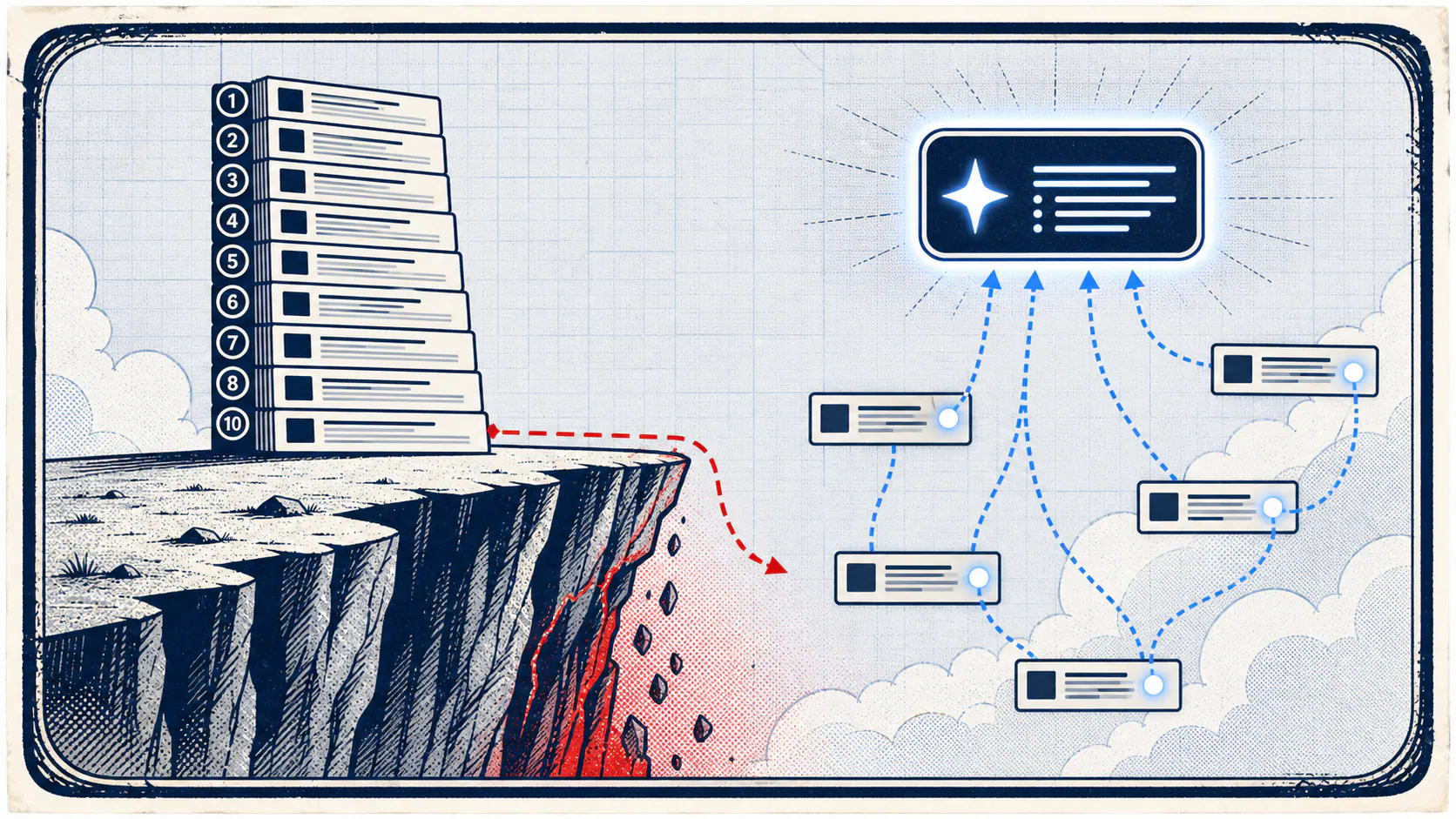
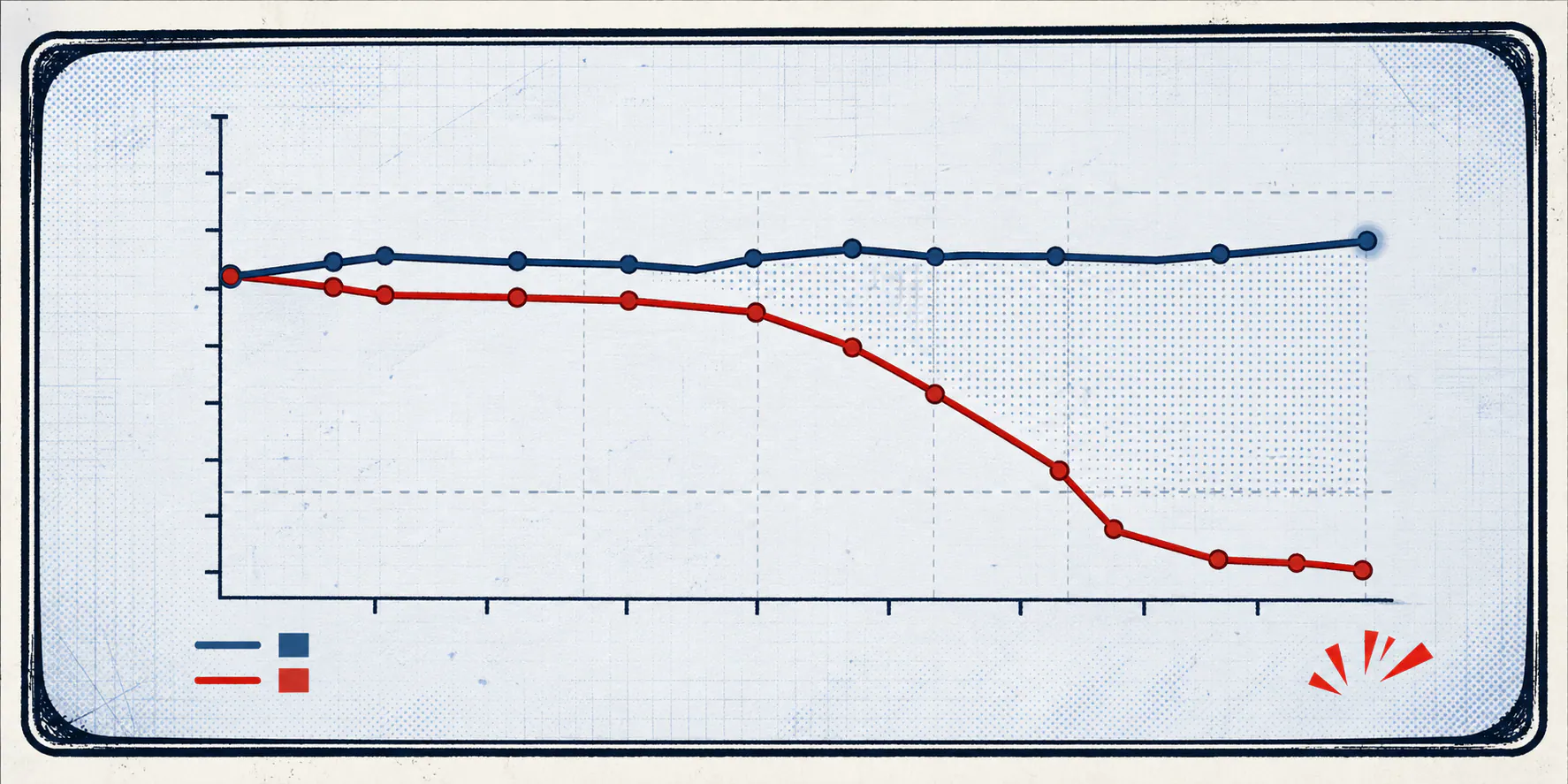
Let me put the numbers on the table, because this is a case where the data is more persuasive than any argument I could make. Ahrefs’ analysis found that only about 38% of AI Overview citations now come from pages ranking in the top 10 — down from a substantially higher share, reported around 76%, not long before. BrightEdge reached the same conclusion from a different angle: roughly five out of every six AI citations point to content that isn’t on page one at all. And one industry analysis pegged even the coveted #1 position at about a one-in-three citation probability on a given answer.
Here’s the nuance that keeps this honest: it’s not that top-10 rankings are worthless. Most AI answers still cite at least one top-10 domain. What’s broken is the tight link between where you rank and whether you get quoted. Your exact position inside the top 10 barely moves the needle, and a large — and growing — share of citations are being pulled from outside the top 10 entirely. That decoupling is the cliff.
Why ranking stopped predicting citation
The mechanism is simpler than it sounds. An AI engine isn’t looking for the best-ranked page; it’s assembling an answer from whatever sources are most extractable, credible, and relevant to the specific sub-question in front of it. That often means stitching together a passage from here, a statistic from there, and a video transcript from somewhere that never ranked for the head term at all. Retrieval happens at the passage and entity level, not the page level.
Freshness compounds the effect — studies consistently find cited content runs meaningfully more recent than the organic top 10. So a page can own the search results and still be the wrong shape, the wrong format, or the wrong age to get cited. Ranking earns you a seat. It no longer earns you the microphone.
“You can hold the number-one ranking and watch an AI answer cite three sources that aren’t you. Position got you into the room; it didn’t get you quoted.”
What actually predicts citation now
This is where it gets useful, because the signals that do correlate with citation are ones you can build. That same May 2026 meta-analysis — Cyrus Shepard’s synthesis of 54 studies over on Zyppy — found brand web mentions correlating about three times more strongly with AI visibility than backlinks, with self-contained structure and editorial depth close behind. Cited content also skewed noticeably fresher than the organic top 10 across nearly 17 million citations.
Read those signals together and a pattern emerges: entity clarity, brand presence across the web, freshness, and cleanly extractable structure. That’s not a ranking checklist — it’s the core of Generative Engine Optimization, the work of earning the citation rather than just the position. The answer-block structure that Answer Engine Optimization focuses on does its part here too, making your best facts easy to lift cleanly.
The measurement gap most teams haven’t closed
Here’s what makes this genuinely dangerous: your ranking dashboards still look fine. You can hold every position you held last year and feel like you’re winning, while your presence in the answers your buyers actually read erodes underneath you. It’s a scoreboard that no longer maps to the game.
Closing that gap starts with measuring the right thing — citation presence, not just rank — which is the Results pillar of our S.T.A.R.SM framework. And the very first step is simply finding out whether AI engines cite you today. That’s exactly what your AI Readiness Score measures: where you currently surface in AI answers, and where you don’t.
Our AI Visibility Report shows exactly which pages are indexed and your site’s exact authority metrics.
Where to start
Don’t waste energy trying to rebuild the old rankings-to-citations correlation — it isn’t coming back. Build the signals that predict citation instead. Start by pulling your AI Readiness Score to see your current citation footprint, then prioritize your highest-value pages for citation-readiness through GEO. Measure presence, fix the pages that matter most, and stop grading yourself on a scoreboard that stopped counting.
Frequently asked questions
Does this mean rankings don't matter anymore?
No. Ranking is still eligibility — an engine can't cite a page it can't crawl, and the technical foundation still has to be there. What's changed is that ranking alone no longer predicts citation, so you need both the ranking work and the citation work.
Where does the "76% to 38%" figure come from?
It's from Ahrefs' analysis of where AI Overview citations originate, and it's corroborated by BrightEdge, which found roughly five of six citations now come from pages off page one. Multiple independent studies point the same direction, which is why it's worth acting on.
If ranking doesn't predict citation, what does?
Brand mentions across the web, entity clarity, content freshness, and cleanly extractable structure. A 54-study meta-analysis found brand mentions correlating about 3x more strongly with AI visibility than backlinks — signals you build through GEO, not through chasing rank.
How do I even know whether I'm being cited?
Your rankings dashboard won't tell you — it's measuring the wrong thing. You have to measure citation presence directly, which is what the AI Readiness Score and a full readiness audit are built to do.
Brian Winum writes about GEO, AEO, technical SEO, entity authority, and AI-search visibility for MAXPlaces Marketing.