GEO vs. AEO vs. SEO: How the Three Disciplines Actually Differ — and Why You Need All Three
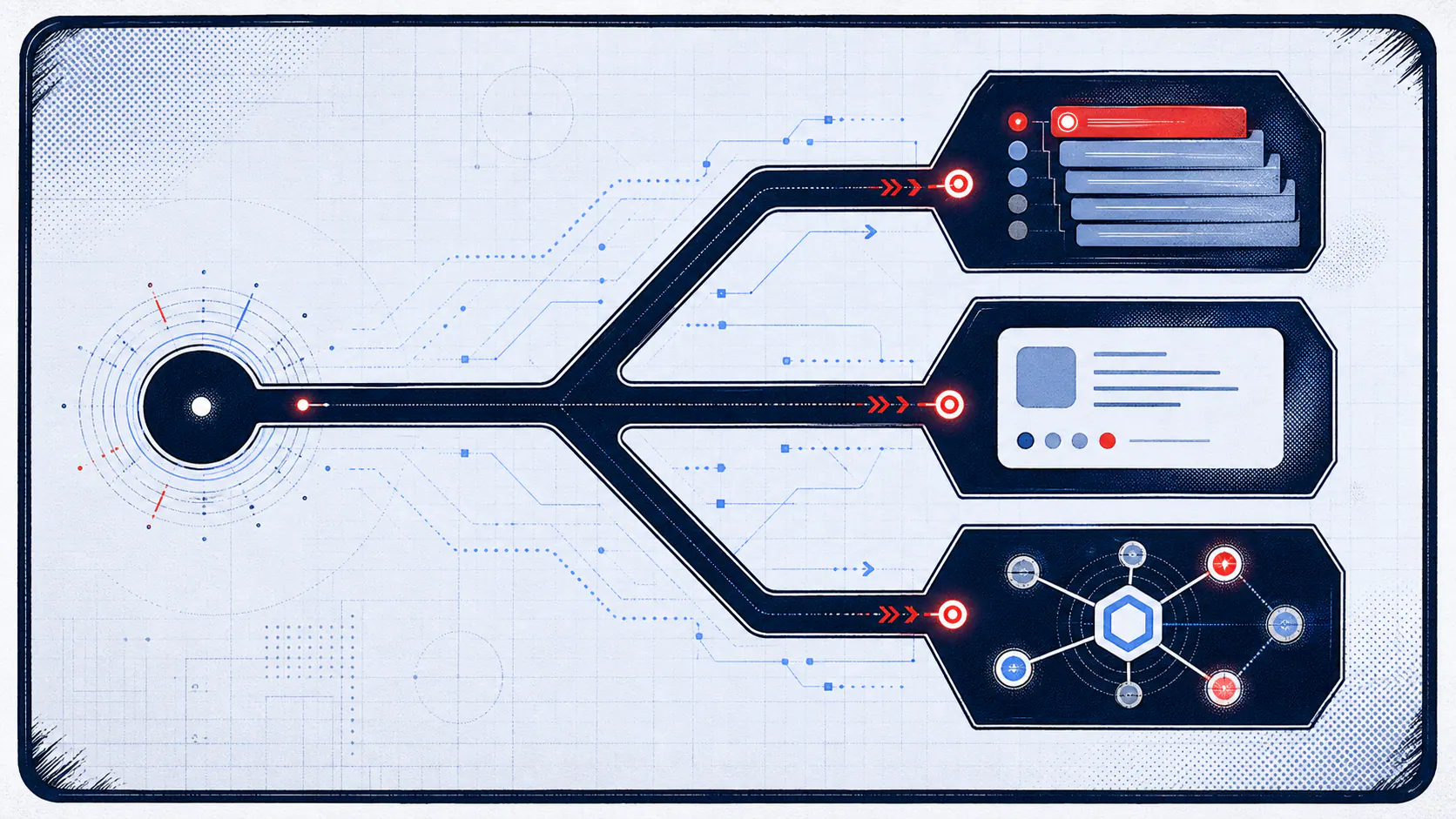
A plain-English breakdown of how SEO earns rankings, AEO earns answers, and GEO earns citations, plus how to sequence all three.
The short version, in one line each
If you take nothing else from this post, take this: SEO earns you the ranking, AEO earns you the answer, and GEO earns you the citation. Same funnel, three different finish lines — and today’s buyer crosses all three before they ever fill out a form. Everything below is just those three sentences with the receipts.
SEO: earning the ranking
Search engine optimization is the original discipline and still the bedrock: making a site crawlable, fast, well-structured, and relevant so it ranks in the classic list of links. This is where Technical SEO lives — the crawl readiness, architecture, and performance work everything else stands on.
Here’s the part teams forget in the rush toward shiny new acronyms: ranking is still the price of admission. An AI engine can’t quote or cite a page it can’t crawl and understand in the first place. Weak foundation, and the other two disciplines have nothing to stand on.
AEO: earning the answer
Answer Engine Optimization targets a different outcome — being the answer an assistant reads back to your buyer. An answer engine responds to a query with a synthesized answer instead of a list, so AEO is the work of making your content answer-first, self-contained, and verifiable enough to be lifted cleanly. The surface here is the AI Overview or the chat response, not the ten blue links.
GEO: earning the citation
Generative Engine Optimization (GEO) is about being named and cited across the wider world of generative engines and third-party models — ChatGPT, Perplexity, Gemini. Where AEO wins the answer on a given surface, GEO works to make your brand the source those engines reach for, again and again, across the web. It leans on entity clarity, original data, and consistency across independent sources — being known, not just being present.
“SEO earns you the ranking. AEO earns you the answer. GEO earns you the citation. Miss one and you’ve quietly handed a stretch of the buyer’s journey to a competitor.”

Our AI Visibility Report shows exactly which pages are indexed and your site’s exact authority metrics.
Why they’re complementary, not competing
The framing that trips teams up is “which one should we do?” — as if these were competing vendors. They’re not. They share a foundation, they often share the very same page, and they build on each other in sequence. The most common mistake I see is treating GEO as a replacement for SEO, or assuming AEO is simply “the new SEO.” It’s additive, not either/or.
That’s also why running them as three disconnected initiatives backfires — you end up with three teams optimizing past each other. Our S.T.A.R.SM framework exists to keep strategy, technical work, authority, and measurement pulling in one direction, so the three disciplines reinforce each other instead of competing for attention and budget.
One page, three jobs — what the overlap looks like
Concretely, a single page can serve all three at once. Clean, crawlable HTML and sensible internal links serve SEO. An answer-first section that stands on its own serves AEO. And clear entity signals — like the Organization schema below — help a generative engine know exactly who you are and cite you correctly:
{
  "@context": "https://schema.org",
  "@type": "Organization",
  "name": "MAXPlaces Marketing",
  "url": "https://www.maxplaces.com/",
  "sameAs": [
    "https://www.linkedin.com/company/maxplaces-marketing",
    "https://www.trustpilot.com/review/maxplaces.com"
  ]
}
An entity signal, not a ranking trick. It tells a machine exactly who you are and where else you’re verified — the clarity GEO depends on, and that SEO quietly rewards too.
Where to start
You don’t need three separate initiatives launched next quarter. Start by seeing how you actually show up across all three today — our AI Readiness Audit gives you that baseline in one pass. From there, sequence the work: shore up the technical foundation, make your highest-intent pages answer-ready, then build the entity clarity and authority that earns citations, which is the heart of our Generative Engine Optimization work.
Measure first, sequence deliberately, and resist the urge to boil the ocean. Do that, and you’re covering the whole journey — ranking, answer, and citation — instead of winning one and losing the buyer at the next step.
Frequently asked questions
Is GEO just the new name for SEO?
No. GEO shares SEO’s technical foundation but targets a different outcome — being cited inside generative engines like ChatGPT and Perplexity, rather than ranking in a list of links. It’s a layer on top of SEO, not a replacement for it.
If I can only invest in one right now, which should it be?
Start with the technical SEO foundation, because both AEO and GEO depend on it — an engine can’t answer with, or cite, a page it can’t crawl and understand. Once that’s solid, the sequence usually runs SEO, then AEO, then GEO.
Do GEO, AEO, and SEO compete for the same pages or budget?
They share pages far more than they compete for them — the same well-structured page can rank, get quoted, and get cited. The work is coordinated, not duplicated, which is why we run all three under one framework instead of three separate playbooks.
How do I measure success across all three?
Different finish lines need different metrics: rankings and organic traffic for SEO, answer inclusion for AEO, and citation share and AI-referred visibility for GEO. An AI Readiness Audit establishes a baseline across all three so you’re not guessing.
Brian Winum writes about GEO, AEO, technical SEO, entity authority, and AI-search visibility for MAXPlaces Marketing.