Digital PR Without the Fluff: How Earned Links Build Real Authority
A plain-English guide to separating real digital PR from link schemes, and how earned coverage builds durable authority, entity recognition, and AI citations.
Real digital PR is a completely different discipline, and it’s one of the highest-leverage investments a serious brand can make right now. It’s the work of earning genuine coverage and links from authoritative sources — the kind that compound into real domain authority and, in the AI era, into the entity recognition that gets you cited. Let me draw the line between the two clearly, because confusing them is expensive in both directions.
The line between digital PR and link schemes
Here’s the cleanest test I know for telling them apart: would this coverage exist if the link didn’t? If a publication is writing about you because you have something genuinely worth covering — original data, expert commentary, a real story — then the link is a byproduct of real relevance. That’s digital PR. If the only reason the “coverage” exists is that money or a reciprocal link changed hands, that’s a scheme, no matter how it’s dressed up.
Link schemes — paid links that pass authority, link farms, mass low-quality guest posting, private blog networks, exact-match anchor spam — all share that manufactured quality, and they all violate Google’s guidelines. The enforcement has only gotten sharper: sites get hit with algorithmic devaluation or an outright manual action, and the cleanup costs far more than the links ever delivered. Real digital PR carries none of that risk because there’s nothing to hide — the coverage is legitimately earned.
Why earned links compound — and bought ones don’t
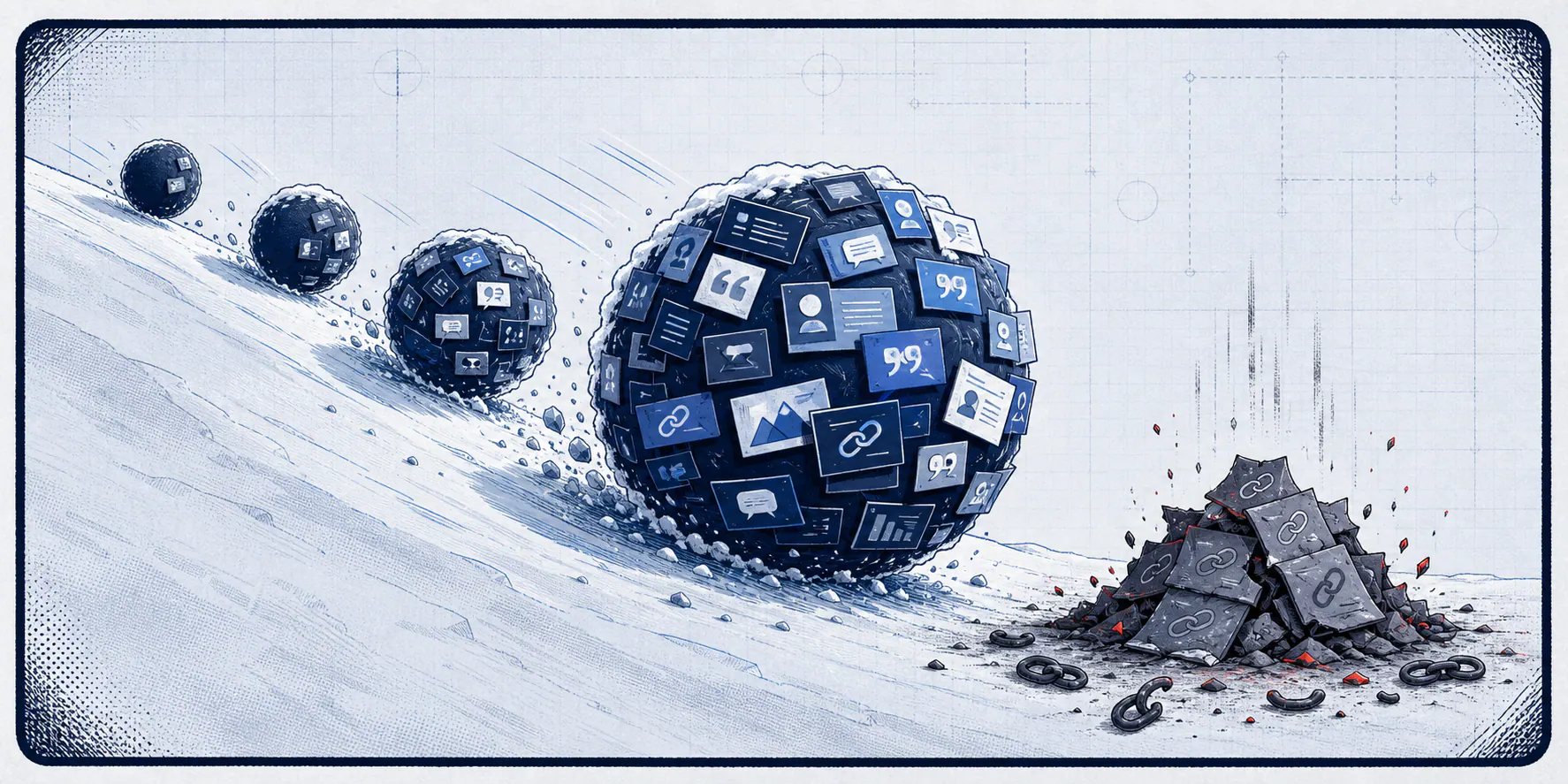
The deeper reason to care about the distinction isn’t just safety; it’s economics. Earned coverage builds on itself. One credible mention makes the next one easier — journalists reference prior coverage, authority attracts authority, and a track record of being cited by respected sources becomes its own credential. Your domain authority climbs as a natural consequence.
Bought links do the opposite. They’re a one-time transaction that decays, gets devalued in the next update, or turns into a liability you have to disavow later. You’re not building an asset; you’re renting one, on terms the landlord can change without notice.
“A bought link is a rental you can be evicted from. An earned mention is equity — it compounds, and no algorithm update can repossess it.”
From links to entity recognition — why this matters more now
In the AI era, digital PR does something even more valuable than passing link equity: it builds your entity. Every time an authoritative source describes who you are and what you’re known for, consistently and credibly, you become a more recognizable, more trustworthy entity in the eyes of both search and AI systems. That recognition is exactly what an engine leans on when it decides whether to name you in an answer.
This is also why the old obsession with links alone is outdated. Even unlinked brand mentions build entity signals — analyses of AI visibility keep finding that brand mentions correlate more strongly with getting cited than raw backlinks do. So the goal shifts from “acquire links” to “be consistently described by sources the web trusts.” That’s the bridge from authority to citation, and it’s why digital PR now feeds directly into Generative Engine Optimization, not just rankings.
Our AI Visibility Report shows exactly which pages are indexed and your site’s exact authority metrics.
The newsroom is your compounding engine
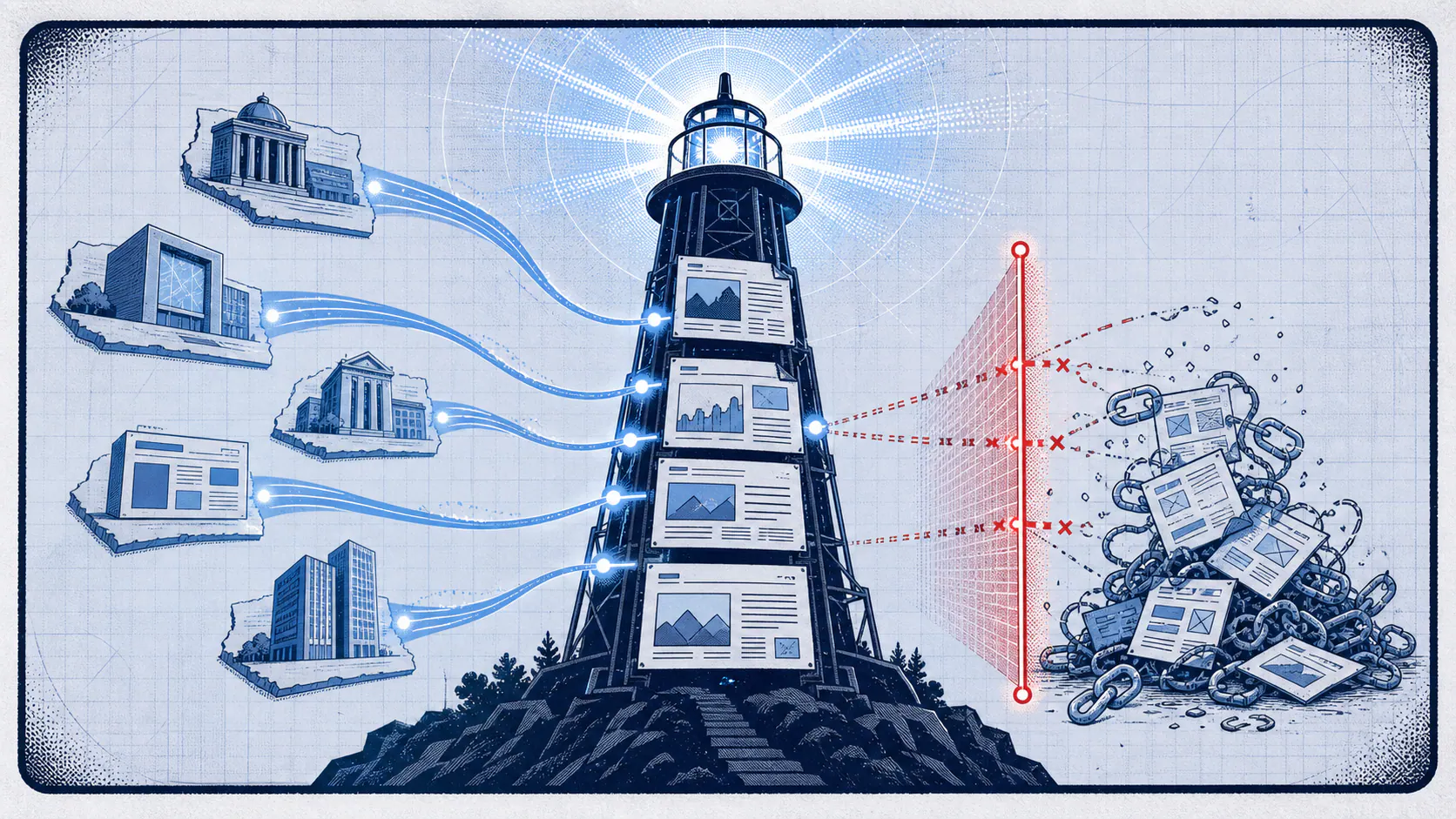
All of that earned authority needs a home, and that’s what a proper newsroom is for. Your owned Press / Newsroom — coverage archive, releases, and the story of who’s talking about you — is where earned authority accumulates and becomes discoverable and citable. It’s a destination for the coverage you earn and a signal in its own right: a brand that’s clearly being covered reads as a brand worth covering.
Treat it as infrastructure, not an afterthought. Every earned mention that lands there compounds the next pitch, gives journalists a reason to take you seriously, and gives AI engines one more consistent, credible source describing exactly who you are.
How to earn it — and where to start
Real digital PR runs on three things: genuinely newsworthy assets — original data, research, or a distinct expert point of view — relationships with the journalists and publications your buyers actually read, and disciplined outreach that’s both proactive and reactive to what’s happening in your space. None of it is fast, and that’s the point: it’s the same reason earned authority is so durable once you have it.
This is the work of Authority Building & Digital PR, and it’s how you operationalize the “Authoritativeness” that E-E-A-T rewards. Sequenced within our S.T.A.R.SM framework so it reinforces your technical and content work rather than running off on its own, it becomes the compounding engine behind both your rankings and your citations. Start with one genuinely newsworthy asset and the relationships to place it — then let it compound.
Frequently asked questions
Isn’t buying a few high-quality links harmless?
No. Google’s guidelines treat paid links that pass authority as manipulation, and enforcement — both algorithmic and manual — has gotten much better at catching it. When earned coverage is safer and compounds, the risk of bought links simply isn’t worth it.
Do unlinked brand mentions actually help?
Yes. Mentions build the entity recognition and consistency signals that both search and AI systems rely on, even without a clickable link. Analyses of AI visibility repeatedly find brand mentions correlating more strongly with citation than backlinks do.
How long does digital PR take to pay off?
It compounds over months rather than flipping on overnight. The trade-off is worth it: unlike bought links, earned authority appreciates over time and survives algorithm updates instead of being put at risk by them.
How is digital PR different from traditional PR?
Traditional PR chases coverage for awareness; digital PR is engineered so that coverage also builds the links, mentions, and entity signals that drive search and AI visibility. It’s the same craft aimed at a sharper, measurable target.
Brian Winum writes about GEO, AEO, technical SEO, entity authority, and AI-search visibility for MAXPlaces Marketing.